13916964679

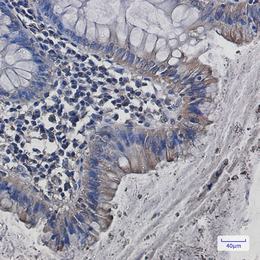
Note: Application as IHC, only suitable for histochemical staining or fluorescence staining of paraffin-embedded sections. Application as ICC/IF, suitable for histochemical or fluorescent staining of frozen sections, as well as chemical and fluorescent staining at the cellular level.
注意:抗体应用为IHC的,抗体只适合于石蜡切片的组化染色或者荧光染色。
抗体应用为IF/ICC的,抗体适合于冰冻切片的组化染色或者荧光染色,以及细胞水平的化学染色和荧光染色。
ABMART实验方案下载
Non-receptor protein tyrosine kinase which is activated following engagement of many different classes of cellular receptors including immune response receptors, integrins and other adhesion receptors, receptor protein tyrosine kinases, G protein-coupled receptors as well as cytokine receptors . Participates in signaling pathways that control a diverse spectrum of biological activities including gene transcription, immune response, cell adhesion, cell cycle progression, apoptosis, migration, and transformation. Due to functional redundancy between members of the SRC kinase family, identification of the specific role of each SRC kinase is very difficult. SRC appears to be one of the primary kinases activated following engagement of receptors and plays a role in the activation of other protein tyrosine kinase families. Receptor clustering or dimerization leads to recruitment of SRC to the receptor complexes where it phosphorylates the tyrosine residues within the receptor cytoplasmic domains. Plays an important role in the regulation of cytoskeletal organization through phosphorylation of specific substrates such as AFAP1. Phosphorylation of AFAP1 allows the SRC SH2 domain to bind AFAP1 and to localize to actin filaments. Cytoskeletal reorganization is also controlled through the phosphorylation of cortactin . When cells adhere via focal adhesions to the extracellular matrix, signals are transmitted by integrins into the cell resulting in tyrosine phosphorylation of a number of focal adhesion proteins, including PTK2/FAK1 and paxillin . In addition to phosphorylating focal adhesion proteins, SRC is also active at the sites of cell-cell contact adherens junctions and phosphorylates substrates such as beta-catenin , delta-catenin , and plakoglobin . Another type of cell-cell junction, the gap junction, is also a target for SRC, which phosphorylates connexin-43 . SRC is implicated in regulation of pre-mRNA-processing and phosphorylates RNA-binding proteins such as KHDRBS1 . Phosphorylates PKP3 at 'Tyr-195' in response to reactive oxygen species, which may cause the release of PKP3 from desmosome cell junctions into the cytoplasm . Also plays a role in PDGF-mediated tyrosine phosphorylation of both STAT1 and STAT3, leading to increased DNA binding activity of these transcription factors . Involved in the RAS pathway through phosphorylation of RASA1 and RASGRF1 . Plays a role in EGF-mediated calcium-activated chloride channel activation . Required for epidermal growth factor receptor internalization through phosphorylation of clathrin heavy chain at 'Tyr-1477'. Involved in beta-arrestin desensitization through phosphorylation and activation of GRK2, leading to beta-arrestin phosphorylation and internalization. Has a critical role in the stimulation of the CDK20/MAPK3 mitogen-activated protein kinase cascade by epidermal growth factor . Might be involved not only in mediating the transduction of mitogenic signals at the level of the plasma membrane but also in controlling progression through the cell cycle via interaction with regulatory proteins in the nucleus . Plays an important role in osteoclastic bone resorption in conjunction with PTK2B/PYK2. Both the formation of a SRC-PTK2B/PYK2 complex and SRC kinase activity are necessary for this function. Recruited to activated integrins by PTK2B/PYK2, thereby phosphorylating CBL, which in turn induces the activation and recruitment of phosphatidylinositol 3-kinase to the cell membrane in a signaling pathway that is critical for osteoclast function . Promotes energy production in osteoclasts by activating mitochondrial cytochrome C oxidase . Phosphorylates DDR2 on tyrosine residues, thereby promoting its subsequent autophosphorylation . Phosphorylates RUNX3 and COX2 on tyrosine residues, TNK2 on 'Tyr-284' and CBL on 'Tyr-731' . Enhances RIGI-elicited antiviral signaling . Phosphorylates PDPK1 at 'Tyr-9', 'Tyr-373' and 'Tyr-376' . Phosphorylates BCAR1 at 'Tyr-128' . Phosphorylates CBLC at multiple tyrosine residues, phosphorylation at 'Tyr-341' activates CBLC E3 activity . Phosphorylates synaptic vesicle protein synaptophysin . Involved in anchorage-independent cell growth . Required for podosome formation . Mediates IL6 signaling by activating YAP1-NOTCH pathway to induce inflammation-induced epithelial regeneration . Phosphorylates OTUB1, promoting deubiquitination of RPTOR . Phosphorylates caspase CASP8 at 'Tyr-380' which negatively regulates CASP8 processing and activation, down-regulating CASP8 proapoptotic function . ; [Isoform 1]: Non-receptor protein tyrosine kinase which phosphorylates synaptophysin with high affinity. ; [Isoform 2]: Non-receptor protein tyrosine kinase which shows higher basal kinase activity than isoform 1, possibly due to weakened intramolecular interactions which enhance autophosphorylation of Tyr-419 and subsequent activation . The SH3 domain shows reduced affinity with the linker sequence between the SH2 and kinase domains which may account for the increased basal activity . Displays altered substrate specificity compared to isoform 1, showing weak affinity for synaptophysin and for peptide substrates containing class I or class II SH3 domain-binding motifs . Plays a role in L1CAM-mediated neurite elongation, possibly by acting downstream of L1CAM to drive cytoskeletal rearrangements involved in neurite outgrowth . ; [Isoform 3]: Non-receptor protein tyrosine kinase which shows higher basal kinase activity than isoform 1, possibly due to weakened intramolecular interactions which enhance autophosphorylation of Tyr-419 and subsequent activation . The SH3 domain shows reduced affinity with the linker sequence between the SH2 and kinase domains which may account for the increased basal activity . Displays altered substrate specificity compared to isoform 1, showing weak affinity for synaptophysin and for peptide substrates containing class I or class II SH3 domain-binding motifs . Plays a role in neurite elongation .
Proto-oncogene tyrosine-protein kinase Src (EC 2.7.10.2) (Proto-oncogene c-Src) (pp60c-src) (p60-Src)
p12931
Human,Mouse,Rat
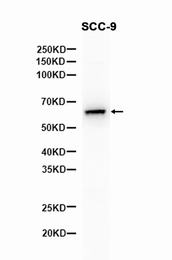
WB,IHC
WB 1:1000-1:10000IHC 1:200-1:500
~60 kD
Rabbit
50mM Tris-Glycine(pH 7.4), 0.15M NaCl, 40% Glycerol, 0.01% sodium azide and 0.05% BSA.
Store at -20°C. Stable for 12 months from date of receipt.




艾比玛特医药科技(上海)有限公司
上海市徐汇区桂平路333号聚科生物园区1号楼1-3层
邮箱:market@ab-mart.com
应聘职位:hr@ab-mart.com
订购专线:4006-123-828
销售电话:13916964679(微信同号)
技术支持:15618194176(微信同号)
华南经销商负责(广东,广西,福建,海南):
程经理:手机18616261485(微信同号)
华北经销商负责(北京,天津,河北):
徐经理:手机15618191473(微信同号)
南方经销商负责:
陆经理:手机13122837132(微信同号)
北方及西南经销商负责:
张经理:手机13122150513(微信同号)

微信客服
邮箱:market@ab-mart.com
应聘职位:hr@ab-mart.com
订购专线:4006-123-828
销售电话:13916964679(微信同号)
技术支持:15618194176(微信同号)
华南经销商负责(广东,广西,福建,海南):
程经理:手机18616261485(微信同号)
华北经销商负责(北京,天津,河北):
徐经理:手机15618191473(微信同号)
南方经销商负责:
陆经理:手机13122837132(微信同号)
北方及西南经销商负责:
张经理:手机13122150513(微信同号)
微信客服
沪ICP备17056956号-2 艾比玛特医药科技(上海)有限公司