13916964679

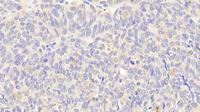
Note: Application as IHC, only suitable for histochemical staining or fluorescence staining of paraffin-embedded sections. Application as ICC/IF, suitable for histochemical or fluorescent staining of frozen sections, as well as chemical and fluorescent staining at the cellular level.
注意:抗体应用为IHC的,抗体只适合于石蜡切片的组化染色或者荧光染色。
抗体应用为IF/ICC的,抗体适合于冰冻切片的组化染色或者荧光染色,以及细胞水平的化学染色和荧光染色。
ABMART实验方案下载
Molecular chaperone implicated in a wide variety of cellular processes, including protection of the proteome from stress, folding and transport of newly synthesized polypeptides, chaperone-mediated autophagy, activation of proteolysis of misfolded proteins, formation and dissociation of protein complexes, and antigen presentation. Plays a pivotal role in the protein quality control system, ensuring the correct folding of proteins, the re-folding of misfolded proteins and controlling the targeting of proteins for subsequent degradation . This is achieved through cycles of ATP binding, ATP hydrolysis and ADP release, mediated by co-chaperones . The co-chaperones have been shown to not only regulate different steps of the ATPase cycle of HSP70, but they also have an individual specificity such that one co-chaperone may promote folding of a substrate while another may promote degradation . The affinity of HSP70 for polypeptides is regulated by its nucleotide bound state. In the ATP-bound form, it has a low affinity for substrate proteins. However, upon hydrolysis of the ATP to ADP, it undergoes a conformational change that increases its affinity for substrate proteins. HSP70 goes through repeated cycles of ATP hydrolysis and nucleotide exchange, which permits cycles of substrate binding and release. The HSP70-associated co-chaperones are of three types: J-domain co-chaperones HSP40s (stimulate ATPase hydrolysis by HSP70), the nucleotide exchange factors (NEF) such as BAG1/2/3 (facilitate conversion of HSP70 from the ADP-bound to the ATP-bound state thereby promoting substrate release), and the TPR domain chaperones such as HOPX and STUB1 . Plays a critical role in mitochondrial import, delivers preproteins to the mitochondrial import receptor TOMM70 . Acts as a repressor of transcriptional activation. Inhibits the transcriptional coactivator activity of CITED1 on Smad-mediated transcription. Component of the PRP19-CDC5L complex that forms an integral part of the spliceosome and is required for activating pre-mRNA splicing. May have a scaffolding role in the spliceosome assembly as it contacts all other components of the core complex. Binds bacterial lipopolysaccharide (LPS) and mediates LPS-induced inflammatory response, including TNF secretion by monocytes . Substrate recognition component in chaperone-mediated autophagy (CMA), a selective protein degradation process that mediates degradation of proteins with a -KFERQ motif: HSPA8/HSC70 specifically recognizes and binds cytosolic proteins bearing a -KFERQ motif and promotes their recruitment to the surface of the lysosome where they bind to lysosomal protein LAMP2 . KFERQ motif-containing proteins are eventually transported into the lysosomal lumen where they are degraded . In conjunction with LAMP2, facilitates MHC class II presentation of cytoplasmic antigens by guiding antigens to the lysosomal membrane for interaction with LAMP2 which then elicits MHC class II presentation of peptides to the cell membrane . Participates in the ER-associated degradation (ERAD) quality control pathway in conjunction with J domain-containing co-chaperones and the E3 ligase STUB1 . It is recruited to clathrin-coated vesicles through its interaction with DNAJC6 leading to activation of HSPA8/HSC70 ATPase activity and therefore uncoating of clathrin-coated vesicles (By similarity). .
Heat shock cognate 71 kDa protein (EC 3.6.4.10) (Heat shock 70 kDa protein 8) (Heat shock protein family A member 8) (Lipopolysaccharide-associated protein 1) (LAP-1) (LPS-associated protein 1) HSPA8 HSC70 HSP73 HSPA10
Mouse;Rat;Human
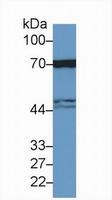
WB,IHC
WB 1:300-1:1000IHC 1:50-1:200
70.898kD;
HSPA8 HSC70 HSP73 HSPA10
p11142
RKRD06328-Recombinant Heat Shock 70kDa Protein 8 (HSPA8) Asp534~Gly615
Rabbit
Polyclonal
Rabbit IgG
Signal transduction;
Antigen-specific affinity chromatography followed by Protein A affinity chromatography
Liquid
500μg/mL
PBS, pH7.4, containing 0.02% NaN3, 50% glycerol.
Store at +4℃ after thawing. For long-term storage, please store it at -20℃. Avoid repeated freeze / thaw cycles.




艾比玛特医药科技(上海)有限公司
上海市徐汇区桂平路333号聚科生物园区1号楼1-3层
邮箱:market@ab-mart.com
应聘职位:hr@ab-mart.com
订购专线:4006-123-828
销售电话:13916964679(微信同号)
技术支持:15618194176(微信同号)
华南经销商负责(广东,广西,福建,海南):
程经理:手机18616261485(微信同号)
华北经销商负责(北京,天津,河北):
徐经理:手机15618191473(微信同号)
南方经销商负责:
陆经理:手机13122837132(微信同号)
北方及西南经销商负责:
张经理:手机13122150513(微信同号)

微信客服
邮箱:market@ab-mart.com
应聘职位:hr@ab-mart.com
订购专线:4006-123-828
销售电话:13916964679(微信同号)
技术支持:15618194176(微信同号)
华南经销商负责(广东,广西,福建,海南):
程经理:手机18616261485(微信同号)
华北经销商负责(北京,天津,河北):
徐经理:手机15618191473(微信同号)
南方经销商负责:
陆经理:手机13122837132(微信同号)
北方及西南经销商负责:
张经理:手机13122150513(微信同号)
微信客服
沪ICP备17056956号-2 艾比玛特医药科技(上海)有限公司